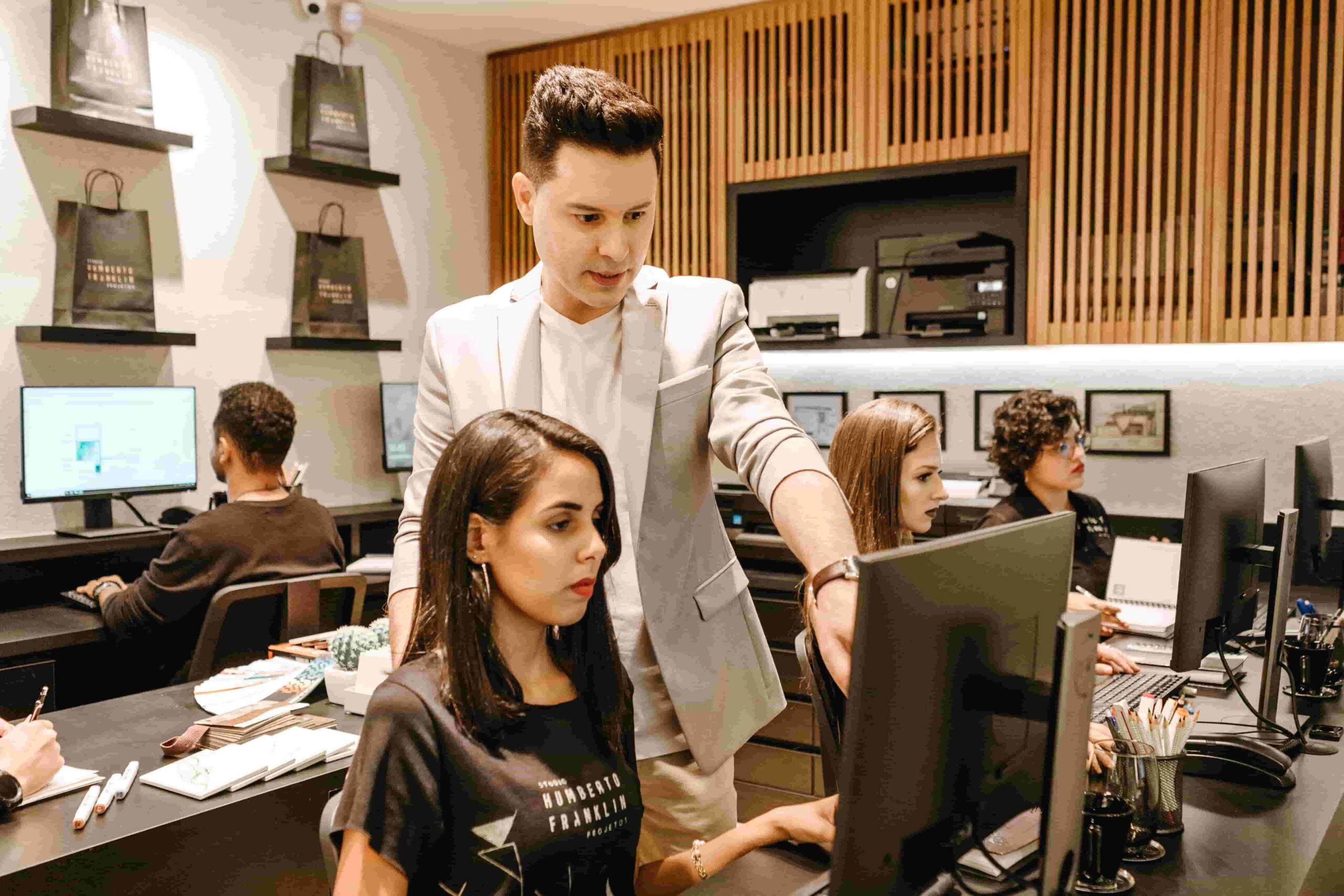

For generations, the first job has been more than a paycheck. It has been where people learn how to work.
A new employee starts with relatively simple responsibilities, observes experienced colleagues, makes mistakes, learns workplace norms and gradually takes on harder problems. Over time, those early experiences become the foundation for a career.
Artificial intelligence is beginning to disrupt that model.
As AI takes over more routine tasks, companies have a new opportunity to rethink what entry-level work should look like. The question is not simply whether AI will eliminate the first job. It is whether organisations can redesign it so that young workers still have a way to gain experience, judgement and the capabilities needed to progress.
The First Rung of the Career Ladder Is Changing
Many traditional entry-level tasks are exactly the kind of work AI can increasingly assist with or automate.
Drafting routine documents. Summarising information. Analysing basic data. Responding to common customer queries. Creating first versions of presentations or code.
These tasks may seem mundane, but they historically served an important purpose. They gave inexperienced workers exposure to real business situations while they developed their skills.
That is what makes the current transition different.
The concern is not only that some tasks may disappear. It is that the learning opportunities attached to those tasks may disappear with them.
The World Economic Forum’s 2026 research on entry-level work notes that more than one in three young workers globally are in occupations with medium to high exposure to AI-driven task change. It argues that the response needs to address job access, job design, talent pipelines and education-system alignment.
AI Is More Likely to Reshape the Job Than Erase It
The evidence does not support a simple story of AI replacing all junior workers.
The International Labour Organization estimates that one in four workers globally are in occupations with some exposure to Generative AI. However, it finds that transformation is more likely than outright replacement because most occupations still require significant human input.
That distinction matters.
A junior analyst may spend less time collecting and formatting information and more time interpreting it. A new marketing employee may use AI to produce initial drafts but spend more time understanding audiences and refining ideas. A junior developer may generate more code with AI while being expected to test, debug and understand what that code actually does.
The work does not necessarily disappear.
Its centre of gravity moves.
The New Entry-Level Worker Needs Judgement
When AI becomes better at producing first drafts and completing routine tasks, human judgement becomes more valuable.
Early-career workers will increasingly need to know:
- When to use AI and when not to use it
- How to evaluate AI-generated outputs
- How to identify errors and unreliable information
- How to communicate decisions clearly
- How to solve problems that do not have obvious answers
- How to collaborate with people and AI systems
- How to keep learning as tools and workflows change
The ILO’s 2026 research on skills in the age of AI points towards greater demand for higher-order cognitive, socioemotional, digital and AI-related capabilities, alongside adaptability, resilience and human agency.
This changes the definition of being job-ready.
AI literacy alone is not enough. A graduate who knows how to generate an answer is not necessarily prepared for work. The more important question is whether they can understand a problem, use technology appropriately, challenge an output and take responsibility for the result.
Employers Need to Redesign the First Job
Companies should not respond to AI by simply removing junior roles and expecting experienced talent to appear later.
That creates a pipeline problem.
Senior employees need experience before they become senior employees. If organisations remove too many early-career opportunities, they may improve short-term efficiency while weakening their future talent pipeline.
A better approach is to redesign entry-level roles around higher-value learning.
That could mean:
- Automating repetitive tasks while giving junior employees responsibility for reviewing and improving outputs.
- Building structured mentorship into early-career roles.
- Giving new employees real projects instead of isolated administrative tasks.
- Measuring learning and capability development alongside productivity.
- Creating clearer pathways from junior responsibilities to more complex work.
The World Economic Forum’s framework similarly calls for organisations to rethink job design and early-career pathways rather than treating AI adoption and entry-level employment as opposing goals.
Education Has to Prepare People for the New Starting Line
The responsibility does not sit with employers alone.
Education systems need to prepare learners for workplaces where AI is part of everyday work. That means combining technical and academic knowledge with communication, problem-solving, adaptability, digital fluency and practical workplace experience.
The transition from education to employment also needs stronger support.
Wadhwani Foundation’s work in employability reflects this broader shift. Its Wadhwani Skills initiative focuses on helping learners build workplace capabilities, access career guidance and prepare for employment through AI-enabled learning and structured career pathways.
In India, Wadhwani Job Ready is designed specifically for students, apprentices, freshers and first-time job seekers preparing to enter the workforce. It focuses on practical employability skills, workplace readiness, interview preparation and AI-enabled learning support. The programme is implemented in India by Skills Development Network (SDN), an independent nonprofit organisation in the Wadhwani Foundation ecosystem.
The First Job Should Not Become the Lost Job
The biggest risk is not that every entry-level position disappears.
It is that organisations automate the work that used to teach people how to become experienced professionals without creating new ways for them to learn.
The first job has always been a bridge between education and experience. AI can make that bridge more productive, but it cannot remove the need for one.
The future of AI and entry-level jobs will depend on whether employers, educators and workforce systems can redesign that first step around judgement, learning and meaningful contribution.
The goal should not be to preserve every task that existed before AI.
It should be to preserve the opportunity to become good at work.