
Introduction & Homelane Overview
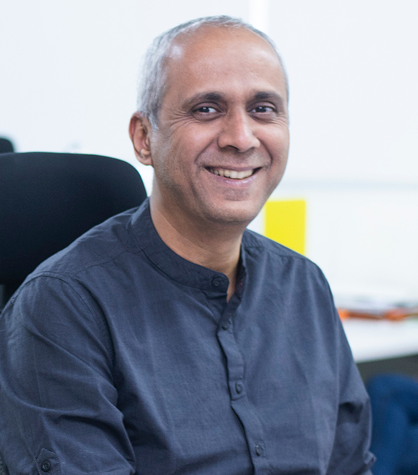
“Howdy howdy good folks welcome to yet another session of Vadani Startup Vision Live. Today we have with us Srikanth Iyer, he’s built a company called Homelane. You
see Homelane around, they’re getting very good at advertising and creating content these days. So you’ve seen them on your feeds and if you live in one of the 50 locations they have their stores in, you would have seen their stores as well.”
“So Homelane, we have totally about 3,000 people now, little short of 3,000. These are full-time employees. We are present in about 32 cities. We serve approximately 1,000 to 1,200 homes every month as in we pretty much install anywhere between 35 and 40 homes a day and handed over 35 to 40 homes every single day.”
“We have two main brands: Homelane and Design Cafe. That’s what we are today.”
Funding & Investment Philosophy
“Valuation? I think I’ll let the more intelligent people figure that out, so I won’t take a guess on that. Revenues? We are at a run rate of about ₹1,000 crores per year. And more importantly, this quarter onwards we will be EBITDA profitable. So we are not dependent on external funding anymore, hopefully. That’s where we are.”
“I was in EdTech for about 14 years and had gotten a reasonably good exit from that. I started a company called Edurite in 2000, along with a couple of co-founders, ran it through two acquisitions, and finally, it got sold. At that point in time, it was one of the largest deals in EdTech. We got bought for about $200 million by Pearson, UK-based. And so it was a good outcome for many people.”
“After that, I worked for Pearson for a year as their CEO for K12 in India. But I was clear that’s not what I wanted to do. I needed to go back and roll up my sleeves and do one more.”
“A very large VC approached me and said, ‘Hey, why don’t you become an entrepreneur in residence? Think of the idea with us, develop it with us, and build the business plan. If you do that, we’ll write you a $5 million check for Series A funding.’”
“For a few weeks, I was not sure whether I wanted to do one more EdTech venture or something completely different. But as I thought more, I realized I had ‘EdTech fatigue.’ I wanted to disrupt something else.”
“It takes 10 years to build something large. Unless you are willing to dedicate the next 10 years of your life, don’t do it. And at that point, I was clear—I didn’t want to do another EdTech startup for another 10 years. So I said no to the $5 million seed check.”
The $50M Fundraising Struggle (148 Rejections)
“I hired a banker and made a solid pitch deck to raise $50M. I met 148 investors over 15 months and got rejected every single time. I was in denial, thinking we were growing too fast to fail. We were adding orders but couldn’t fulfill them effectively. Investors saw through this, and I had to pivot.”
“I got a board approval saying I wanted to go and raise $50 million. We were growing month-on-month, about 50%. Crazy growth! The Times of India even reported that we raised $50 million before we actually did!”
“I was sitting on a cruise ship in Hong Kong with my family when I got a call from one of my board members saying, ‘Congrats, you never told me you raised!’ I said, ‘I didn’t.’ And that was the beginning of the end of that fundraising attempt.”
“After 148 meetings, I got 148 ‘NOs.’ The most humbling time of my life.”
“Eventually, I raised $2 million—after trying to raise $50 million. That’s the reality of startup fundraising.”
The Critical Pivot: Standardization Over Customization
“One big lesson I learned: Variety is the enemy of scale. We were offering too many customization options—painting, flooring, civil work, even a music-themed room for a kid. But we couldn’t deliver efficiently. Investors pointed out this flaw.”
“We were accepting all kinds of orders—one customer wanted a music-themed room for their kid. Another wanted specific flooring. We took those orders, but we couldn’t deliver. That’s when I realized we needed to standardize.”
“We pivoted. We removed all the unnecessary customization and focused on a standardized modular system—wardrobes, kitchens, entertainment units, etc. That made our business scalable.”
“First, we removed civil work, flooring, painting, and many other things. Then, we focused only on modular furniture.”
“This helped improve our gross margins from 30% to 50%.”
Hiring and Retaining Top Talent
“A Senior Product Manager from Google joined Homelane at 25% of his previous salary. I convinced him by offering strong ESOPs and an opportunity to build something big. He stayed, and later launched his own startup.”
“I told him: ‘You’ll work directly in my team, get transparency, decision-making power, and if you want to start up later, this is the best launchpad.’”
“Stock options (ESOPs) played a huge role in attracting top talent.”
Choosing the Right Industry & Business Model
“If I were to start from scratch today, I would pick an industry that either I know or can quickly learn about. I entered interior design because it had a real problem—99 out of 100 homeowners had a terrible experience setting up their homes. That was my opportunity.”
“What appealed to me? Simple—if you ask 100 homeowners about their interior design experience, 99 will cry on your shoulder for 10 minutes.”
“It was a real problem to solve, and the gross margins in this business are very good. Interior design is a customized product, and there’s no fixed MRP. That makes it a great industry to build a scalable business in.”
Finding the Right Investors (Red Flags to Avoid)
“A bad investor will demand a 2X or 3X liquidation preference—meaning they get double their money back before you see any returns. Avoid such investors.”
“Also, avoid investors who try to micromanage your operations. You run the company, not them.”
“The best investors provide strategic advice, introductions, and funding—but they don’t interfere in your daily operations.”
Final Advice to Entrepreneurs
“The biggest lesson I’ve learned: As a founder, you are the brand ambassador of your company’s culture. Your behavior sets the tone for everything. If you don’t live your values, neither will your employees.”
“The hardest thing about entrepreneurship is knowing when to pivot and when to persist. Monitor your CAC, retention rates, and unit economics—if they don’t make sense, you need to pivot.”
“Most importantly—if you can delay raising funds, do it. Build a sustainable business first, then look for external capital.”