

Starting a business sounds exciting. But is passion enough to survive in a tough market? Many young entrepreneurs have great ideas, energy, and creativity. Yet, without the right skills and guidance, their chances of long-term success drop. That’s where structured entrepreneurship training programs come in.
These programs teach the basics of running a business, help build real-world skills, and provide access to resources and mentorship. Let’s explore the key benefits of joining such programs — and how they help entrepreneurs succeed over time.
1. Learning the Basics: Building a Strong Business Foundation
Entrepreneurs need to understand how a business works — not just what to sell. These programs teach:
| Tema | What You Learn | Por qué es importante |
|---|---|---|
| Finanzas | How to budget, manage money, track costs | Keeps your business profitable |
| Marketing | How to attract and keep customers | Helps you grow your customer base |
| Operaciones | How to run your business day-to-day | Keeps your business organized |
| Strategy | How to plan for growth and compete | Helps you stay ahead of others |
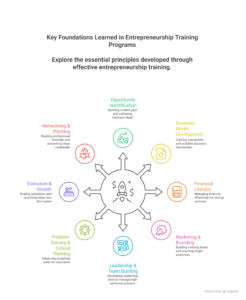
- Leadership and management skills
Many young entrepreneurs start their journey with passion and ideas but lack real leadership experience. This is where entrepreneurship training or business start up training courses offer real value. These programs teach participants how to develop leadership from within, guiding them step by step as they learn to lead both themselves and their teams.
Through workshops, mentorship, group projects, and case studies, these programs help entrepreneurs understand how to:
- Communicate clearly and confidently
- Motivate and manage diverse teams
- Build trust and handle conflicts
- Make quick but thoughtful decisions
- Set goals and drive team performance
One powerful example taught in many programs is the LEAD framework, which offers a simple, action-based structure for leadership growth. It breaks leadership down into four clear steps:
| Paso | Focus Area | What You Should Do? | Why It Matters? |
|---|---|---|---|
| L | Lead Yourself First | – Set clear daily goals – Stay organized and focused – Manage stress well | You can’t lead others if you’re not in control of yourself |
| E | Establish Vision | – Create a simple mission statement – Set clear team goals – Share your “why” | A clear direction keeps the team aligned and motivated |
| A | Actively Build the Team | – Communicate openly – Give regular feedback – Celebrate small wins | Teams perform better when they feel valued and trusted |
| D | Decide and Adapt | – Make decisions quickly with available info – Be open to change – Learn from mistakes | Good leaders don’t wait too long — they act, learn, and improve |
- Resolución de problemas y pensamiento crítico
Every entrepreneur will face challenges — whether it’s a drop in sales, unhappy customers, or unexpected costs. What sets successful business owners apart is not avoiding problems, but knowing how to solve them quickly and effectively.
Entrepreneurship training courses help young entrepreneurs build strong problem-solving skills. These programs teach a structured approach to thinking clearly, acting wisely, and learning from every situation.
The table below shows how these programs support each stage of the problem-solving process — from identifying the problem to taking action and improving along the way.
| Problem-Solving Step | What these programs Teach | Activities | Long-term Benefit for Entrepreneurs |
|---|---|---|---|
| 1. Spot the Problem | – Identify real business issues – Ask the right questions – Listen to feedback | – Customer interviews – Market analysis – Case studies | Better decision-making through accurate problem detection |
| 2. Analyze It | – Break down complex issues – Use data and logic – Explore root causes | – SWOT analysis – Group discussions – Problem-mapping workshops | Deeper understanding of challenges before taking action |
| 3. Create Solutions | – Brainstorm multiple options – Compare costs and benefits – Think creatively | – Design thinking sessions – Business model testing – Peer brainstorming | Stronger strategies, more innovative solutions |
| 4. Take Action & Adjust | – Test small-scale solutions – Gather feedback – Adapt when needed | – MVP launches – Feedback loops – Mentorship sessions | Agility to respond to change and improve continuously |
- Access to practical, real-world experience
One of the most valuable features of structured business training programs is the chance to learn by doing. While lessons and lectures build foundational knowledge, it’s the real-world application that gives young entrepreneurs the confidence to manage everyday business challenges.
These programs offer more than just classroom teaching. They include live projects, startup simulations, internships, and real case studies – these allow participants to apply what they learn in meaningful, practical ways.
| Method | What It Involves | How It Helps Young Entrepreneurs |
|---|---|---|
| 1. Startup Simulation Projects | Young entrepreneurs plan, build, and manage a mock business as if it were real. | Helps develop decision-making in areas like pricing, marketing, and operations. |
| 2. Business Plan Competitions | Entrepreneurs create and pitch their business ideas to actual investors or mentors. | Improves confidence, communication, and sharpens business strategy. |
| 3. Real Case Studies with Local Startups | Programs connect participants with real businesses facing challenges. They help solve those problems. | Builds critical thinking and shows how businesses function under real pressure. |
| 4. Internships or Founder Shadowing | Entrepreneurs work inside startups or follow experienced founders during their daily routines. | Offers insight into real-time decision-making, leadership, and operations. |
| 5. MVP (Minimum Viable Product) Testing | Participants create a basic version of their product or service and test it with real users. | Teaches how to gather feedback, adjust quickly, and meet actual customer needs. |
- Increased access to funding and resources
Securing adequate funding remains one of the greatest obstacles for young entrepreneurs. Many struggle to find the right investors or to present their ideas in a compelling way. Business training programs address this gap by offering structured opportunities for young entrepreneurs to gain both capital and the knowledge necessary to pursue it effectively.
Through pitch competitions, accelerator programs, incubators, and one-on-one mentorship, these programs create direct pathways to investors and funding agencies. Entrepreneurs receive guidance on refining their business models, preparing professional presentations, and navigating funding applications. This not only improves their confidence but also boosts the likelihood of securing investments.
| Benefit | Descripción |
|---|---|
| Access to Investors | Programs connect entrepreneurs with angel investors, VCs, and grant agencies. |
| Pitch Training | Entrepreneurs learn to craft compelling business pitches and presentations. |
| Incubator & Accelerator Support | Provide early-stage funding, workspace, and operational guidance. |
| Mentorship from Experts | One-on-one advice helps refine strategies and avoid costly mistakes. |
| Resource Sharing | Access to tools, networks, and support services essential for business growth. |
| Funding Readiness | Training on financial planning, budgeting, and investor expectations. |
| Fomento de la confianza | Increases entrepreneurs’ ability to present and negotiate with funders. |
| Partnership Opportunities | Exposure to other startups and industry leaders opens doors for collaboration. |
| Long-term Sustainability | Focuses on building viable business models that can scale over time. |
Entrepreneurship has the power to transform communities and economies. When an entrepreneur grows a business, they will create jobs, innovate, and contribute to economic development. The skills and knowledge from structured entrepreneurship programs can help them scale business responsibly and sustainably. The knowledge that an entrepreneur gains can have a ripple effect on the broader economy. These long-term benefits extend beyond business and positively impact the local community.
Looking for information on entrepreneurship training?
Nuestra iniciativas empresariales are designed to help the participants with the right knowledge and resources.We have trained over 200,000 learners, supported more than 7,000 startups, and partnered with over 250 incubators to facilitate funding. Our programs include:
- Ignite: It is a tailored program for students and aspiring entrepreneurs. With this, we provide the foundational knowledge and skills necessary for an entrepreneurial journey. Participants engage in experiential learning, gain insights into business ideation, market research, and value proposition development.
- Despegue: The program is designed for early-stage startups, where entrepreneurs get guidance from industry experts to help refine business models, enhance brand visibility, and develop effective go-to-market strategies. Through personalized mentorship and access to a network of investors and partners, startups can scale efficiently and encounter the complexities of the market.
- Academy: Our Academy focuses to provide senior management teams of small and medium-sized enterprises (SMEs) with the strategies and mindset required to drive business success. Through tailored interventions, participants gain insights into leadership development, strategic planning, and operational efficiency.
- Acelera: Growth-stage ventures looking to find new opportunities and grow faster can gain a lot from our program. Participants get help with market research, improving their products, and planning how to scale. With the right support and guidance, these ventures can become more competitive and succeed over the long term.